
Explore TEVET®
Click any topic below to view it in full.
The Challenge
Every OBM/SBM Well Leaves Contamination Behind
Every well drilled with oil-based mud (OBM) or synthetic-based mud (SBM) produces large volumes of drill cuttings coated in drilling fluid — cuttings arrive at surface heavily contaminated with hydrocarbon, sometimes above 15% by weight. Regulations require these cuttings to be treated to acceptable hydrocarbon levels before disposal.
Beyond drill cuttings, decades of oilfield operations, fuel spills, and industrial activity have also left hydrocarbon-contaminated soils across oilfields, military bases, and aviation facilities — the same treatment challenge, in a different setting. TEVET® treats both by exactly the same thermal desorption process: the matrix is the same, sand, clay, and rock coated with hydrocarbons.
The Platform
An Integrated Engineering Platform, Not a Piece of Equipment
TEVET® is a platform, not a pile, a trailer, or a burner. It integrates thermal energy generation, process air management, engineered treatment reactor construction, vapor collection, vapor treatment, monitoring & control, and analytical verification into one coordinated treatment platform.
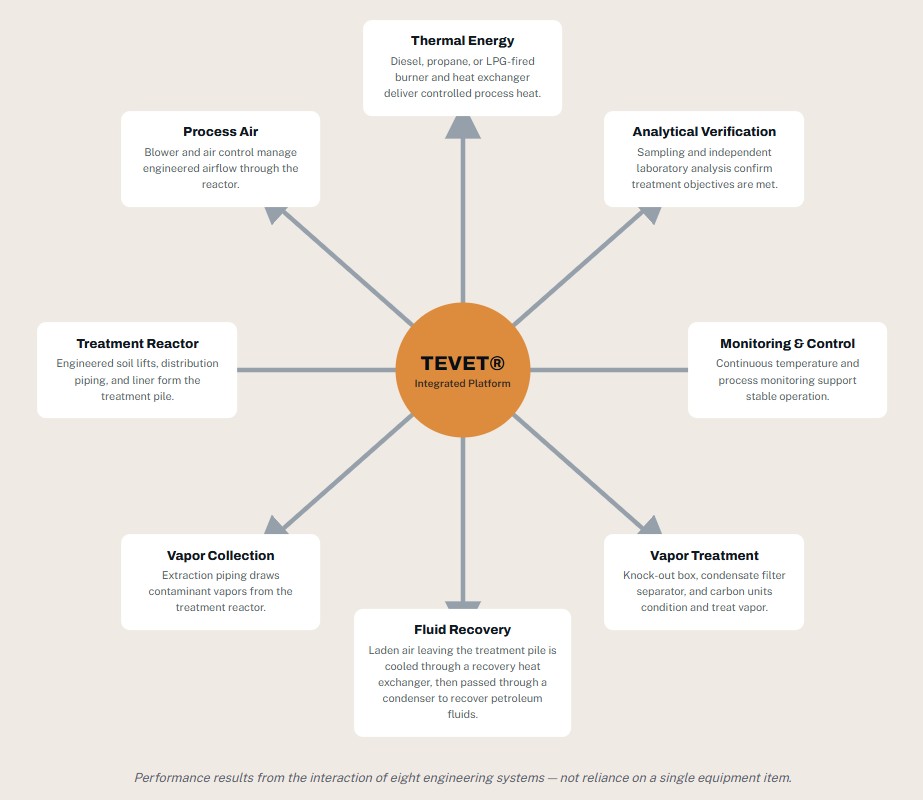
Thermal Energy
Diesel, propane, or LPG-fired burner and heat exchanger deliver controlled process heat.
Process Air
Blower and air control manage engineered airflow through the reactor.
Treatment Reactor
Engineered soil lifts, distribution piping, and liner form the treatment pile.
Vapor Collection
Extraction piping draws contaminant vapors from the treatment reactor.
Fluid Recovery
Laden air leaving the treatment pile is cooled through a recovery heat exchanger, then passed through a condenser to recover petroleum fluids.
Vapor Treatment
Knock-out box, condensate filter separator, and carbon units condition and treat vapor.
Monitoring & Control
Continuous temperature and process monitoring support stable operation.
Analytical Verification
Sampling and independent laboratory analysis confirm treatment objectives are met.
Performance results from the interaction of eight engineering systems — not reliance on a single equipment item.
The Technology & How It Works
THE TECHNOLOGY — One process, every matrix
TEVET® is Hilltop's proprietary thermal treatment platform for petroleum hydrocarbon and chlorinated-solvent contaminated solid matrices. Precisely controlled heated air volatilizes hydrocarbons out of the solid matrix — no special permanent facility required.
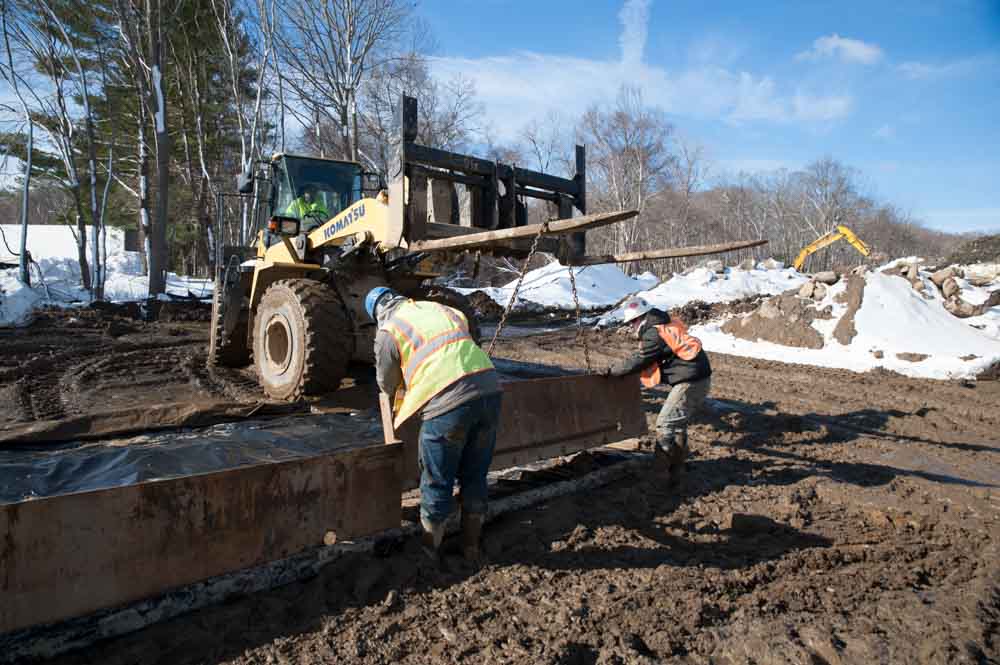
Build
Contaminated drill cuttings or soil are placed in a treatment cell over an impermeable liner — no special permanent facility required. Injection and vapor-recovery piping is installed through the pile.
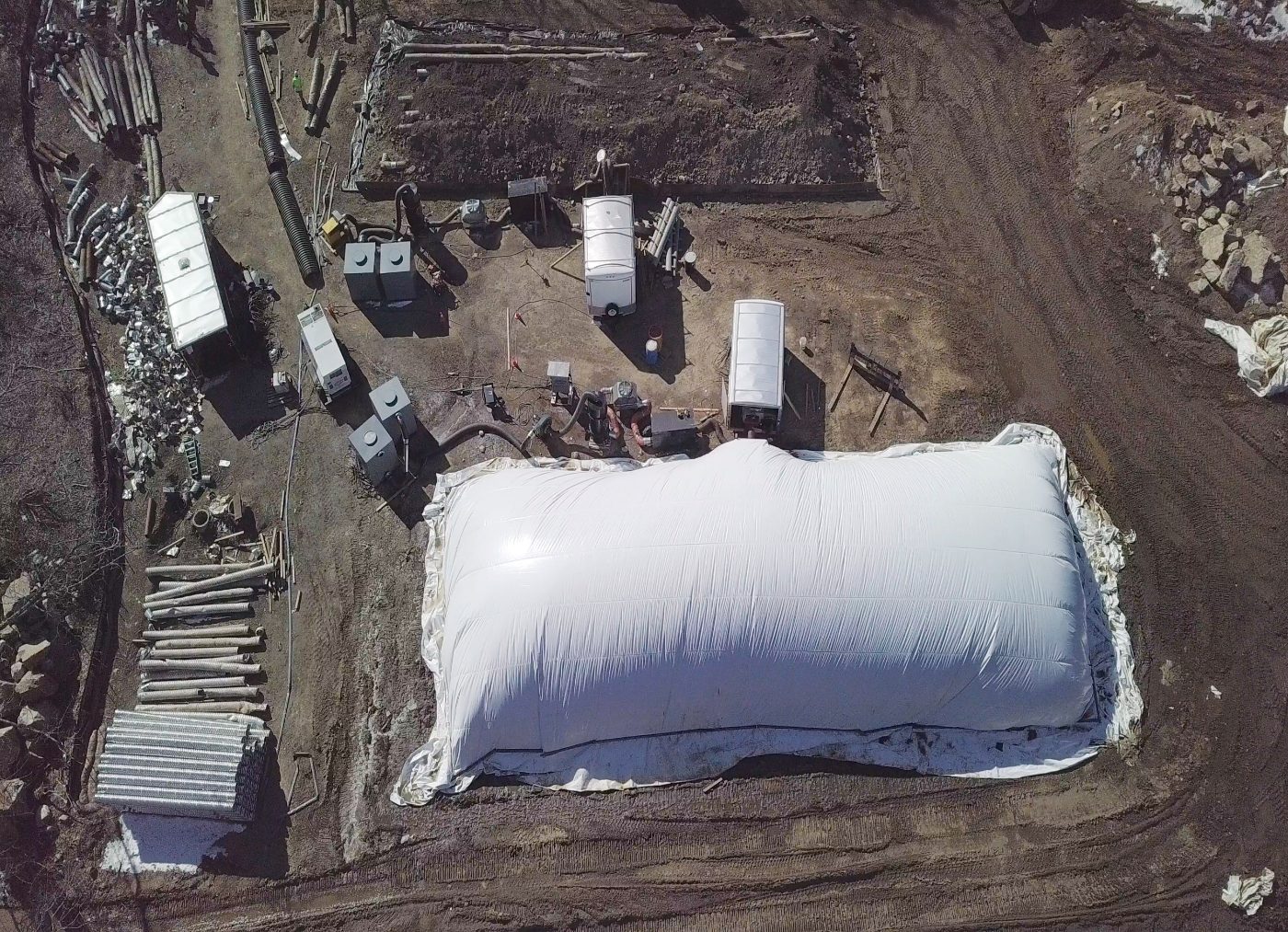
Treat
Heated air is passed through the material at controlled temperature and airflow. The heat volatilizes petroleum hydrocarbons bound in the solid matrix.
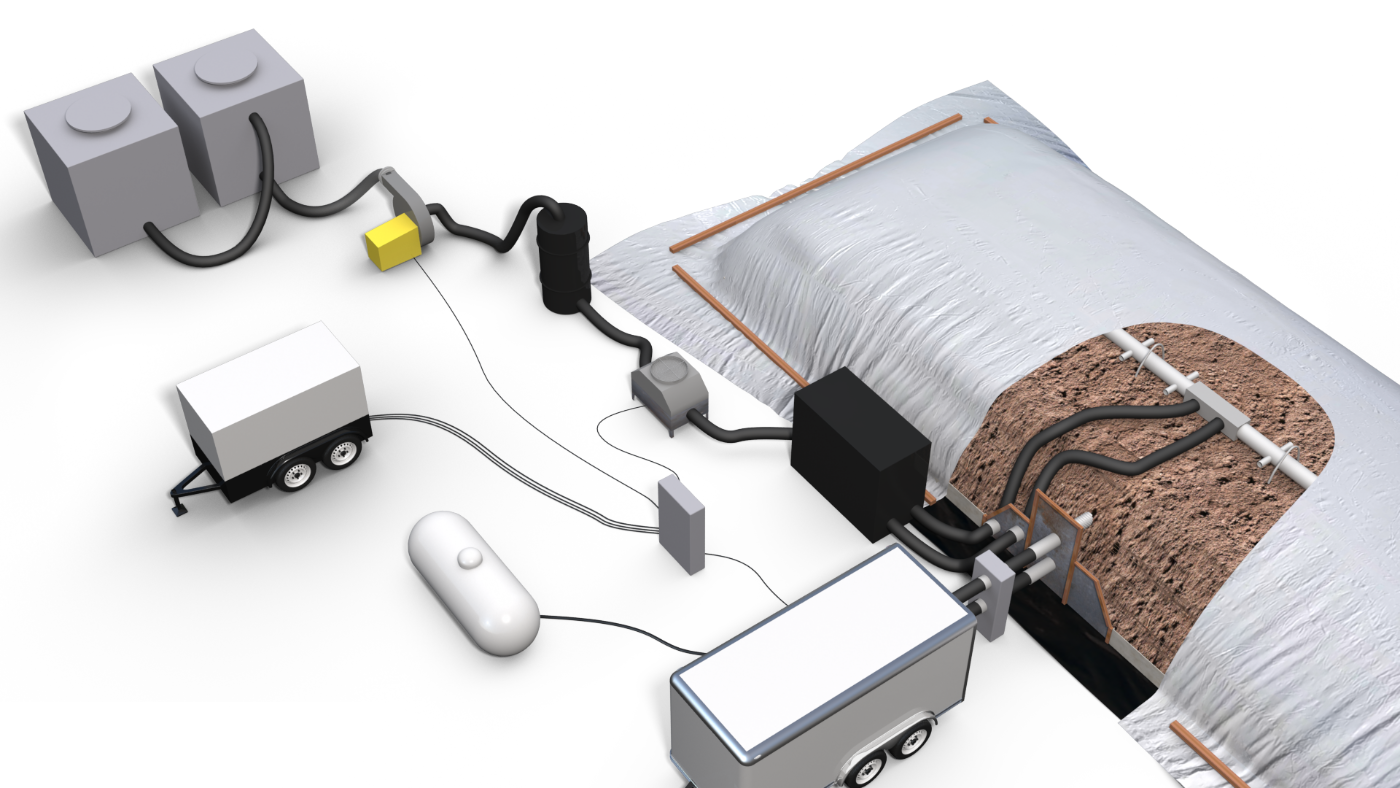
Destroy or Recover
Vapors are collected and thermally destroyed in a high-temperature combustion unit — or, where conditions allow, condensed and the fluid recovered for reuse.
HOW IT WORKS — Inside the treatment cell
Heated air enters the pile through the injection manifold at a temperature independently controlled for the material being treated; hydrocarbon vapor drawn out through the extraction manifold passes through the knock-out box, heat exchanger, and condensate filter separator before being destroyed in the burner unit at ~1,000°C — a distinct, hotter zone from the pile itself — or polished through carbon units.
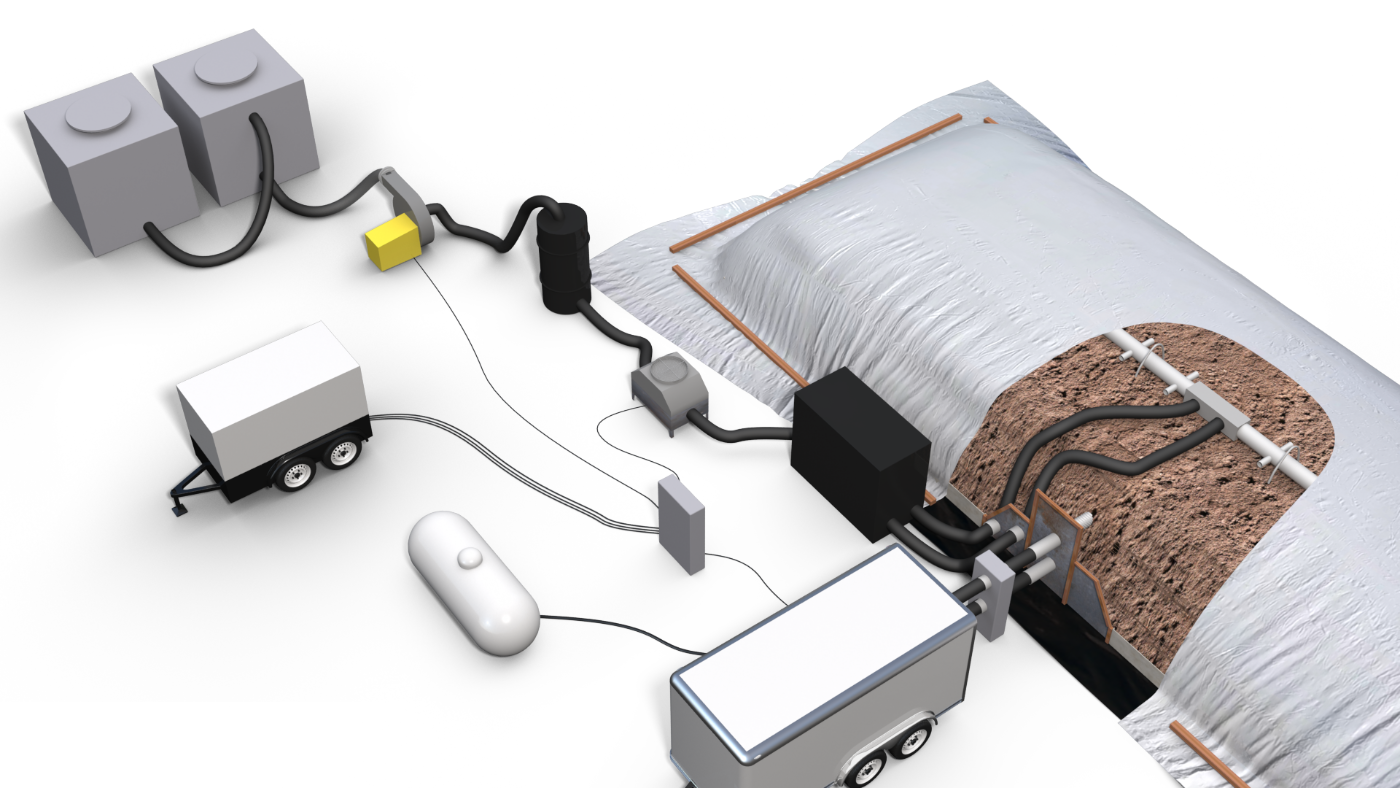
Core system components
- Impermeable liner & treatment cell
- Air distribution piping (injection manifold)
- Vapor recovery piping (extraction manifold)
- Ingress & egress air blowers (~3,000 CFM)
- Heat exchanger & condensate system
- Burn chamber — diesel, propane, or LPG-fired
- Catalytic reactor bank
- Mobile power & control skid
Field-Proven
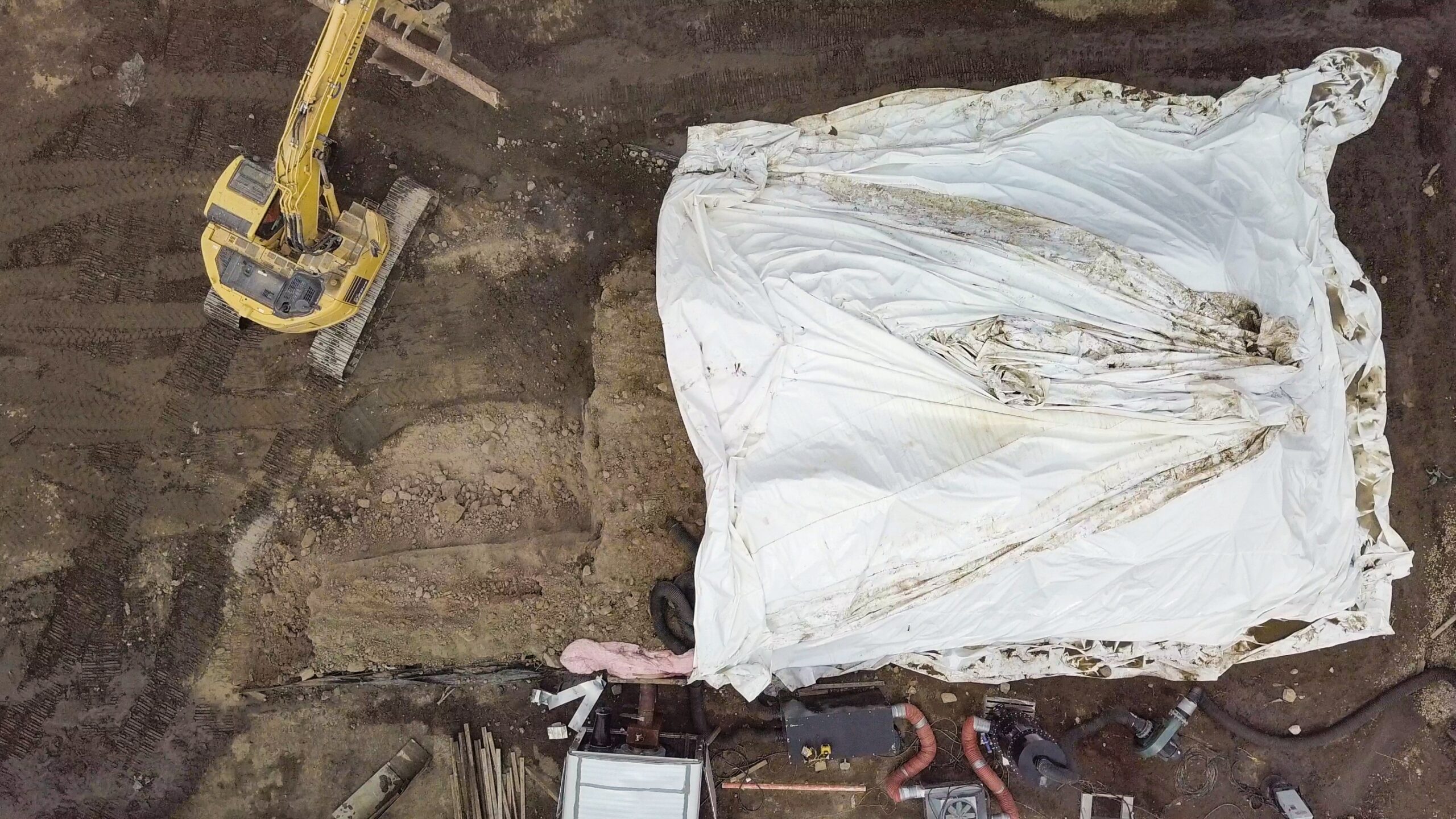
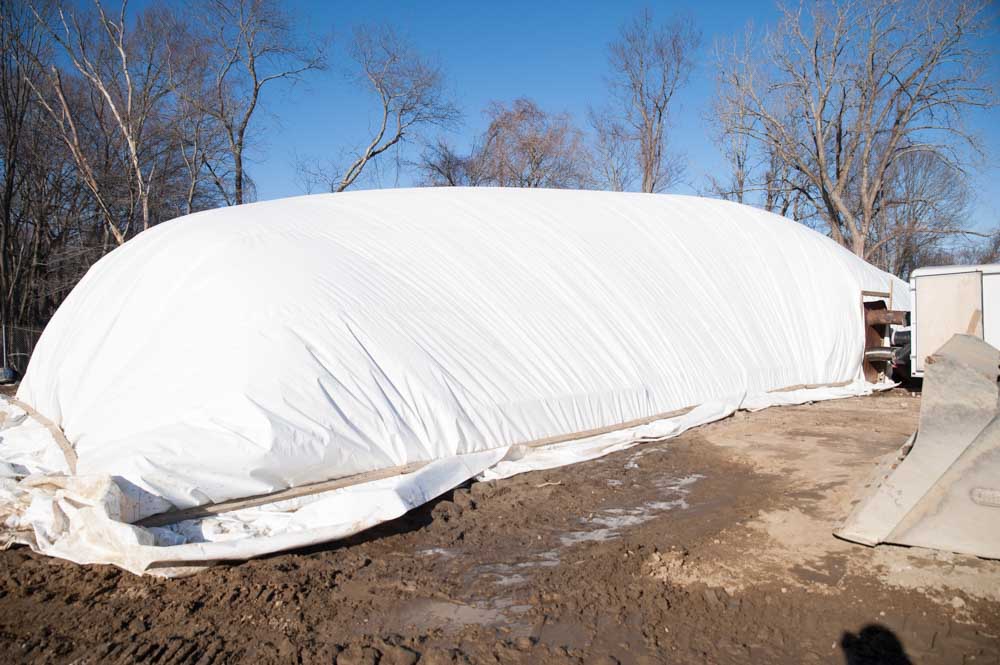
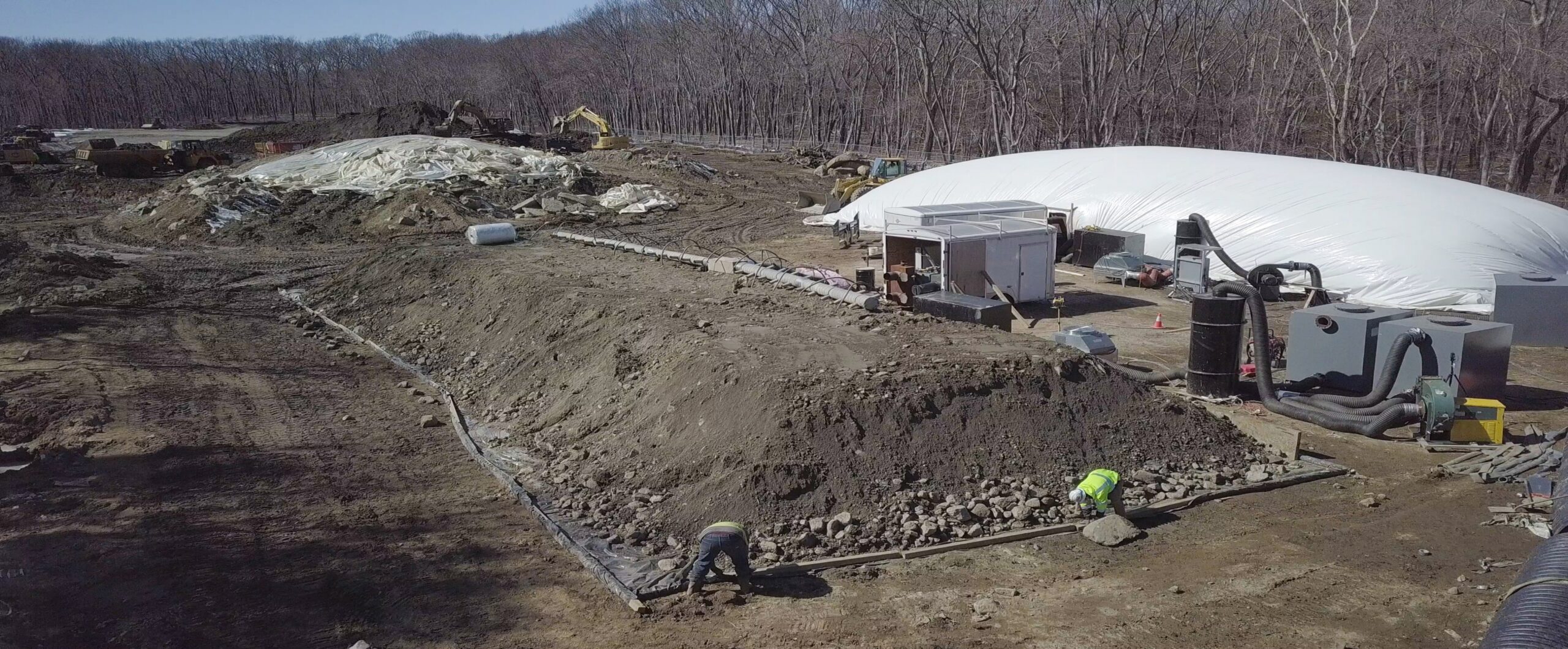
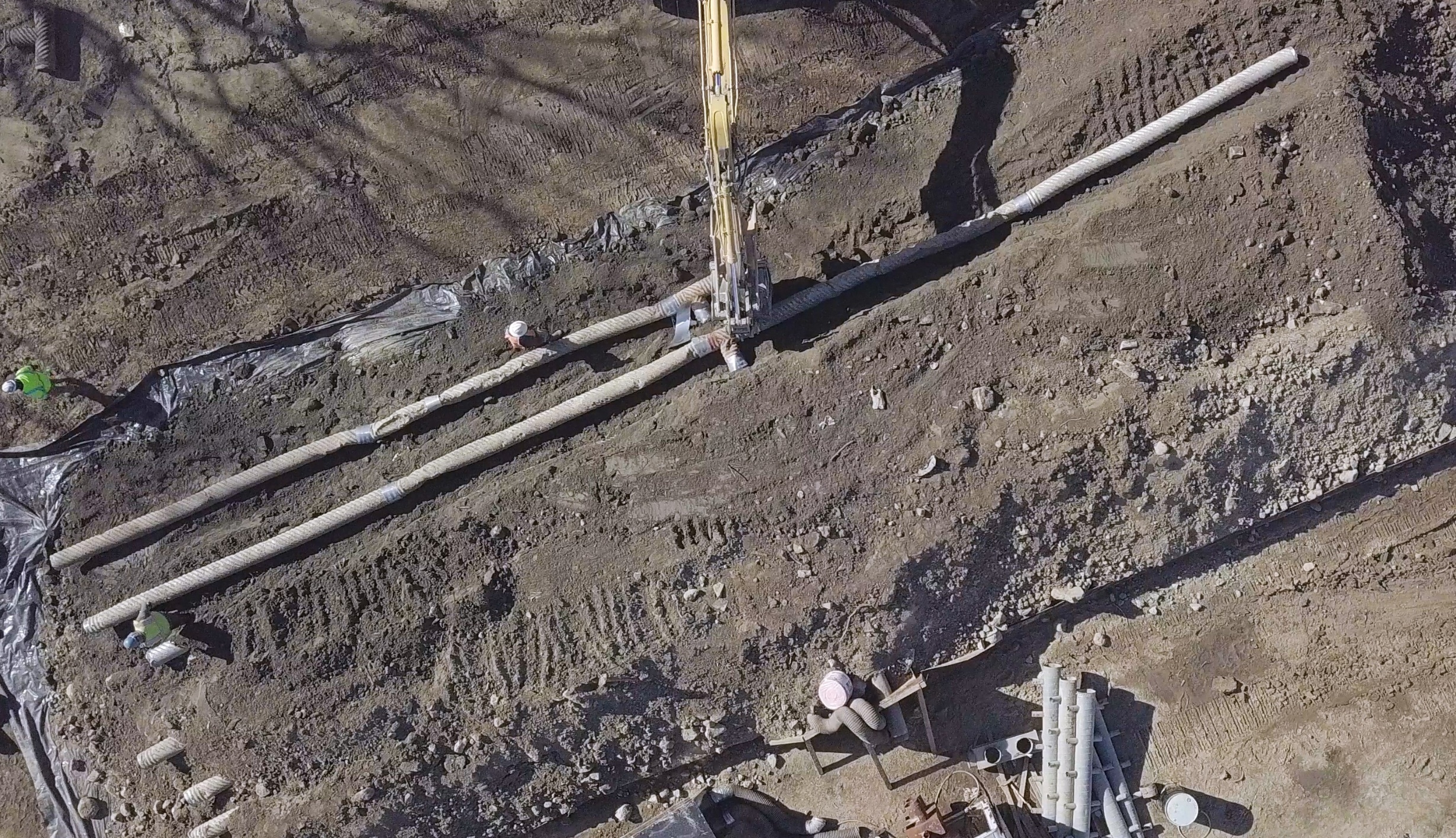
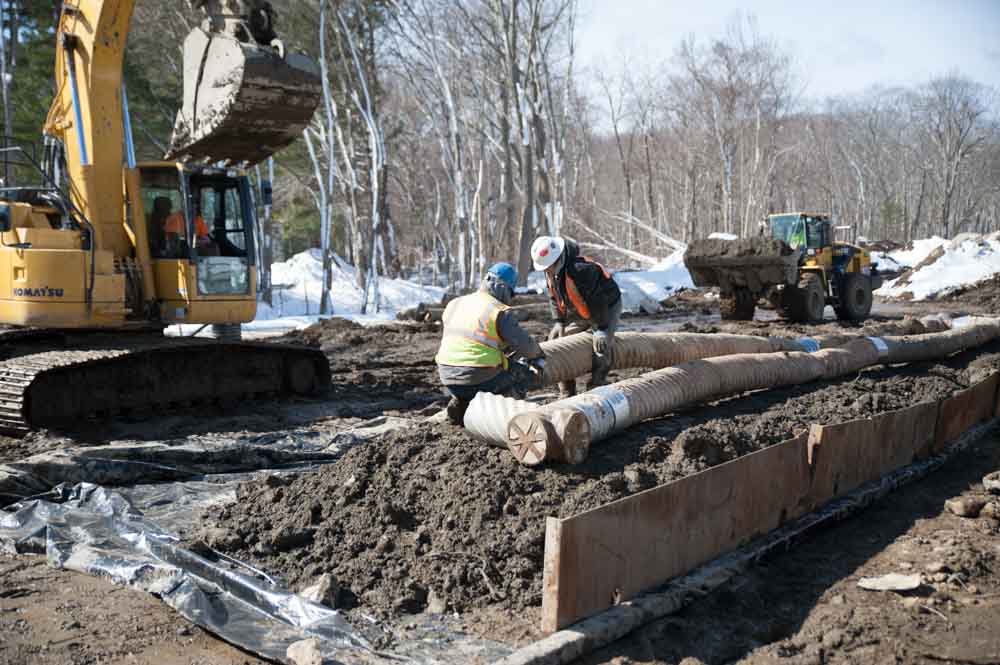
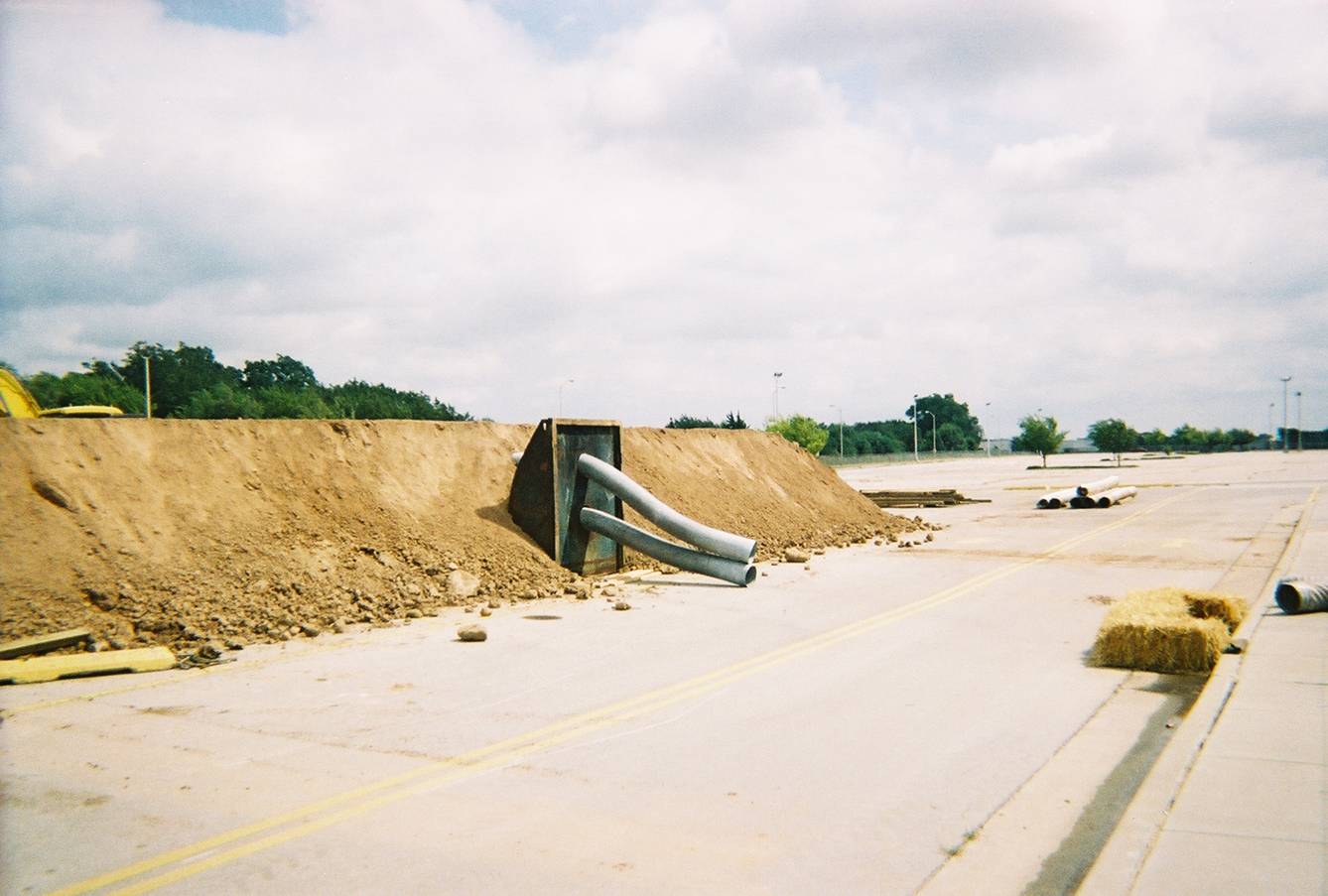
Built, Sealed, and Operated in the Field
Economics
Why Fluid Recovery Matters
Oil-Based Mud (OBM)
Petroleum-based oil as the continuous fluid phase. TEVET® recovers the base oil from OBM cuttings — commercial value that can be reused in the drilling fluid system, reducing fluid purchase costs.
Synthetic-Based Mud (SBM)
An engineered synthetic fluid used in technically demanding wells — deep, deviated, HPHT — where it can be a significant share of total drilling-fluid cost. Conventional high-heat systems destroy it above ~200–250°C. TEVET®'s precise temperature control stays below that threshold, recovering SBM fluid intact.
Competitive Position
TEVET® vs. Conventional Thermal Desorption
| CRITERION | DIRECT TD | INDIRECT TD | TEVET® |
|---|---|---|---|
| Capital cost | Multi-million $, fixed infrastructure | Multi-million $, fixed infrastructure | Low — modular, no fixed facility at startup |
| Deployment model | Fixed facility only | Fixed facility only | Mobile field-deployable or centralized |
| Mechanical complexity | High — rotating drum, frequent maintenance | High — screw/paddle conveyors, similar wear | Minimal — no moving parts in material contact |
| Operator requirements | Continuous — constant intervention | Continuous — similar monitoring | Periodic — scheduled checks only |
| SBM fluid recovery | Not possible — heat destroys fluid | Possible, but complex | Precise control — fluid recovered intact |
| Treated output | Clean solids; hydrocarbons destroyed | Clean solids; hydrocarbons may be recovered | Clean solids + oil/fluid recovered |
Track Record
Proven, Verified, Guaranteed
Independent bench-scale studies conducted by Dane M. Tanner Consulting using EPA SW-846 Method 8015M; both results well below the 1.0% remediation goal.
Verified Site Data
Independent laboratory-confirmed results from TEVET® treatment at three U.S. sites, each brought from heavily elevated volatile organic compound and chlorinated solvent concentrations down to regulatory cleanup standards.
| Volatile | Beginning | Ending |
|---|---|---|
| VOCs | > 10,000 ppm | < 170 ppb |
| Chlorinated Solvents | > 500 ppm | < 10 ppb |
| Volatile | Beginning | Ending |
|---|---|---|
| 1,1,1 Trichloroethane | 4,160 ppm | N/D – 100 ppb |
| Trichloroethylene | 1,310 ppm | N/D – 100 ppb |
| Tetrachloroethene | 550 ppm | N/D – 100 ppb |
| Volatile | Beginning | Ending |
|---|---|---|
| VOCs | > 10,000 ppm | < 100 ppb |
| Chlorinated Solvents | 3,000 ppm | < 100 ppb |
ppm = parts per million • ppb = parts per billion • N/D = not detected
We keep treating the pile until required levels are met, or there's no charge for that pile.